

Why your packages keep arriving broken
1 in every 25 shipments arrives with damage. Here's what's actually causing it — and the packaging decisions that make the real difference.
Shipping damage isn't just a logistics problem. It's a customer loyalty problem — and it's largely preventable.
Industry data puts the damage rate at 3–4% of all U.S. shipments. That sounds small until you're the brand on the other end of the return request. At scale, it compounds fast: damaged goods, claims processing, replacement inventory, and — most costly of all — the customer who simply doesn't come back.
The good news: most damage traces back to a short list of fixable packaging decisions. Here's what's actually going wrong.
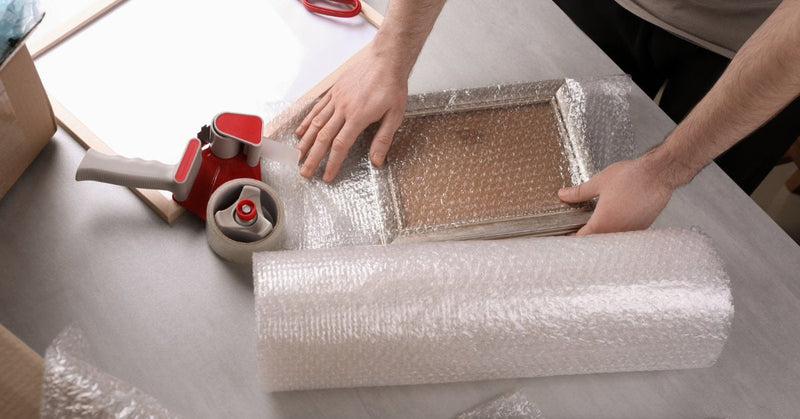
Small-bubble wrap (3/16") conforms to product shapes and excels at surface protection — it's your wrapping material. Large-bubble wrap (1/2") absorbs impact from drops and fills voids for heavier items — it's your cushioning material. Using large bubbles to wrap delicate items leaves gaps. Using small bubbles to fill big voids underperforms on impact. The match between product and bubble size matters more than most sellers realize.
Most packaging damage happens because only the top or bottom of a box is padded. The industry standard for fragile item shipping calls for at least 2 inches of cushioning on all six interior surfaces. A single layer of bubble on the bottom and nothing on the sides leaves your product one sideways drop away from a return.
When a product can shift inside its box, it will. Every stop, jostle, and conveyor transfer lets it build momentum and strike the interior walls. The fix isn't always more void fill — it's a box closer to the product's size so movement is minimized before cushioning has to do its job.
A box sealed with a single strip of thin tape fails more often than most sellers expect. The H-tape method — full center seam plus both end seams on top and bottom — is the industry standard because it distributes stress across the entire closure, rather than relying on one strip. One extra pass of tape is cheap. A lost customer isn't.
Packages get stacked, sorted at high speed, loaded into hot trailers, and dropped at varying heights throughout their journey. A package that's fine if handled carefully is not a package that's fine. Design for the conditions your shipment will actually encounter — not ideal handling.
The NRF's 2025 Retail Returns Landscape put the average ecommerce return rate at 19–20% of online orders. Damage and defect are consistently among the top causes. Getting your cushioning right is one of the few levers entirely within your control.
Start with the right bubble wrap for your product
Our 3/16" bubble roll is ideal for wrapping individual items snugly. Our 1/2" bubble roll handles void fill and cushioning for heavier products. Not sure which fits your application? Request a free sample and test before buying in bulk.
Shop Bubble Roll → Request a free sample